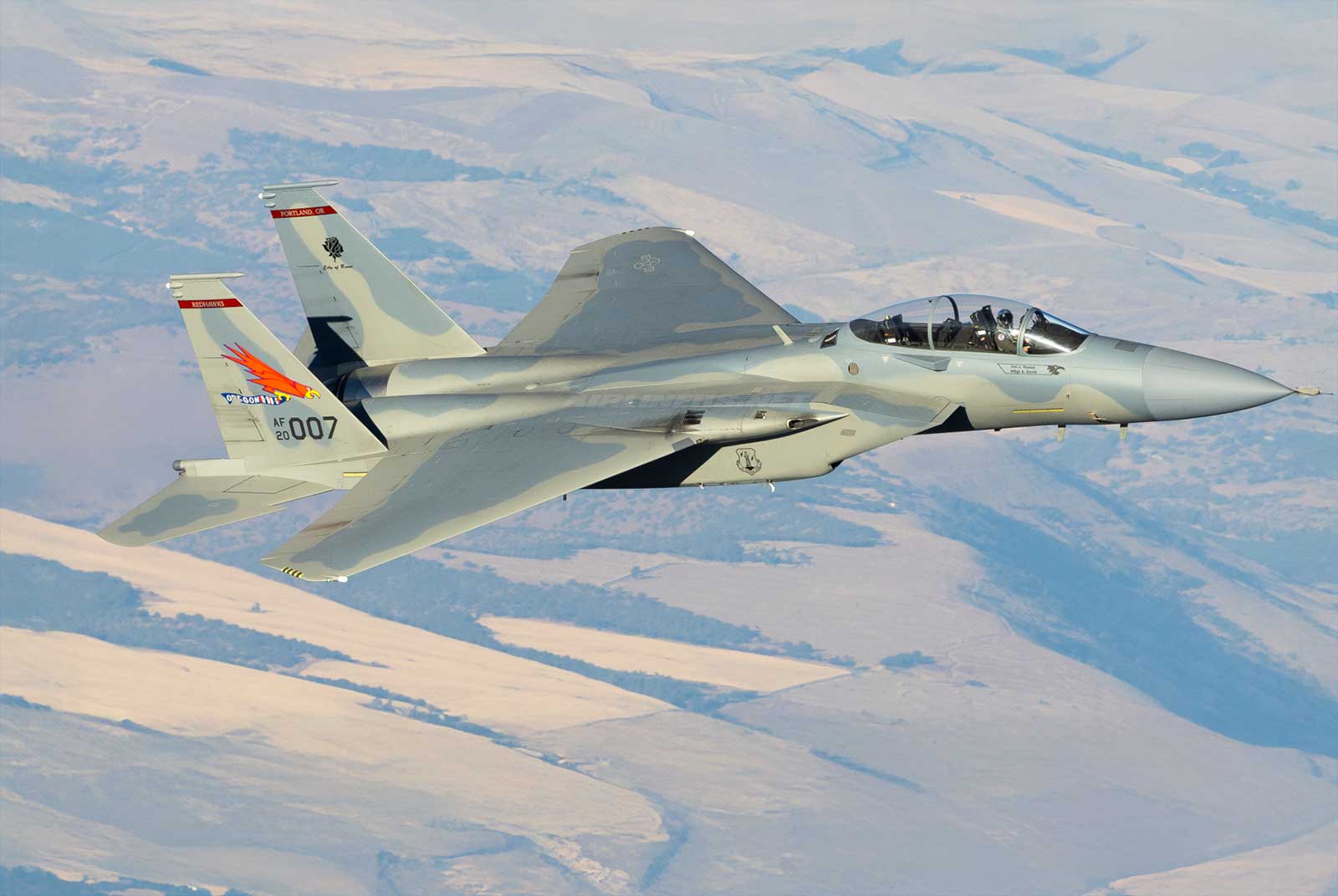
The F-15EX Eagle II: Unpacking the Real Cost Beyond the Sticker Price
When the topic of advanced military aircraft arises, one question frequently posed is, "Was kostet ein F15 Kampfjet?" or "What does an F15 jet cost?" Many casual observers might hear figures in the ballpark of $90-100 million for an F-15EX Eagle II and assume that's the full story. However, like any sophisticated piece of technology, especially one designed for national defense, the initial "sticker price" is merely the entry point to a much larger financial commitment. The F-15EX, the latest iteration of the iconic F-15 Eagle, represents an investment far exceeding its initial flyaway cost, encompassing a complex web of factors from advanced systems to decades of operational expenses. Understanding the true F-15EX total cost requires a look beyond the factory floor.
The Initial Price Tag: More Nuance Than Meets the Eye
The "flyaway" price of a fighter jet refers to the cost of the aircraft itself, fresh off the production line, before extensive customization or full integration of mission systems. For the F-15EX Eagle II, this figure has seen fluctuations. Depending on the production lot and the specifics of the contract negotiated between Boeing and the U.S. Air Force, the cost per jet can vary:
- Lot 2: Approximately $90 million per F-15EX.
- Lot 3: Increased to around $97 million per F-15EX.
- Lot 4: Saw a slight decrease, averaging about $94 million per F-15EX.
These variations aren't arbitrary. Several economic and industrial factors influence these initial F-15EX price tag figures. Inflation, for instance, has played a significant role in recent years, pushing prices upwards from previous figures below $80 million. Challenges within the defense industry, such as labor shortages and disruptions in global supply chains for critical components, also contribute to rising manufacturing costs. Moreover, the specifics of each contract—the number of jets ordered in a particular lot and the bargaining power of the purchasing entity—can lead to different per-unit prices. It’s also worth noting that the F-15EX's flyaway cost has become a point of discussion, with some analyses suggesting it might now be higher than that of a Lockheed Martin F-35A, a fifth-generation stealth fighter. To delve deeper into what specifically drives these initial figures, you might find our article
F-15EX Eagle II Price: What Drives Its 90-100 Million Dollar Cost? particularly insightful.
Beyond Bare Metal: The Cost of a Combat-Ready F-15EX
While the flyaway cost gives us a baseline, a bare F-15EX is not a combat-ready F-15EX. To truly understand the investment, we must account for the integration of vital additional systems that transform the airframe into a potent warfighting machine. These are not optional extras; they are critical for modern aerial dominance and pilot survivability.
Consider the following essential components that push the F-15EX's price considerably higher:
- Electronic Warfare Systems: The Eagle Passive/Active Warning Survivability System (EPAWSS) is a prime example. This state-of-the-art electronic warfare suite provides enhanced situational awareness, threat detection, and self-protection capabilities, allowing the F-15EX to operate effectively in contested environments.
- Targeting Pods: Advanced targeting pods, such as the AN/AAQ-33 Sniper Advanced Targeting Pod or the Legion Pod, provide crucial long-range precision targeting capabilities, enabling pilots to identify, track, and engage targets with exceptional accuracy, day or night, and in all weather conditions.
- Infrared Search and Track (IRST) Systems: IRST sensors offer passive, long-range detection of airborne threats, complementing radar systems by providing an alternative way to track adversaries, especially stealth aircraft, without emitting detectable signals.
- Advanced Communications & Datalinks: Secure, high-bandwidth communication systems are essential for network-centric warfare, allowing the F-15EX to share real-time tactical data with other aircraft, ground stations, and command centers.
When these critical systems and others are factored in, an F-15EX fully equipped for combat can easily reach around $117 million per jet. This significant increase underscores that a "fully loaded" aircraft is what truly represents its strategic value and operational capability. For an air force, acquiring three F-15EXs could thus translate to an expenditure of approximately $270-291 million, depending on the specific equipment package and the unit price from its production lot.
The True Titan: Life-Cycle Costs and Operational Expenses
The acquisition price, even when fully equipped, is just the tip of the iceberg when evaluating the F-15EX total cost. The profound financial commitment truly emerges when considering the "life-cycle costs"—the expenses incurred over the entire operational lifespan of the aircraft, which can span 40 years or more. These ongoing operational expenses often far outweigh the initial purchase price, making a simple "price per jet" list profoundly misleading in security policy discussions.
Life-cycle costs encompass a wide array of expenditures:
- Maintenance and Repair: Modern fighter jets require meticulous and frequent maintenance. This includes routine checks, repairs for wear and tear, and addressing complex system failures. This isn't just about labor; it's also about the astronomical cost of specialized spare parts, many of which are proprietary and produced by a single vendor.
- Fuel: High-performance jet engines are notoriously thirsty. The F-15EX, with its powerful twin engines, consumes massive amounts of jet fuel during training missions and operational sorties. Over decades, this accumulates into billions of dollars.
- Personnel: Operating these sophisticated machines requires highly trained individuals. This includes pilots, ground crews, maintenance technicians, logistics specialists, and administrative support. The costs associated with recruitment, extensive training, salaries, benefits, and housing for these personnel are substantial.
- Upgrades and Modernization: To remain relevant and effective against evolving threats, the F-15EX will require periodic hardware and software upgrades throughout its service life. This could include new sensors, improved avionics, updated weapons integration, and cybersecurity enhancements, each representing a significant investment.
- Training and Simulation: Pilots and ground crews must continuously train to maintain proficiency. This involves actual flight hours, which are expensive, and advanced simulation systems, which themselves require significant investment and maintenance.
- Infrastructure: Maintaining suitable airbases, hangars, and specialized repair facilities capable of supporting advanced fighter jets also adds to the long-term cost.
Estimates for life-cycle costs for advanced fighters often suggest that they can be two to three times, or even more, than the initial acquisition cost. For an F-15EX, a single flight hour can cost tens of thousands of dollars, and when multiplied by thousands of hours over decades for an entire fleet, the numbers become staggering.
Factors Influencing the F-15EX's Ever-Evolving Price Tag
The cost of an F-15EX, whether flyaway or total life-cycle, is dynamic and influenced by a confluence of external and internal factors:
Inflation and Economic Climate
Global economic conditions directly impact defense procurement. Surging inflation, as seen in recent years, increases the cost of raw materials, energy, and labor, pushing up manufacturing expenses for complex systems like the F-15EX. Geopolitical instability can also drive demand, affecting production rates and pricing.
Technological Advancement and Customization
The F-15EX is a modern marvel, incorporating advanced avionics, radar upgrades, and integrated electronic protection systems. The continuous pursuit of technological superiority means integrating cutting-edge components, which are inherently expensive to research, develop, and produce. Furthermore, specific customization requests by the purchasing nation can significantly alter the per-unit cost.
Production Volume and Negotiation Power
Military contracts are often structured in "lots" or batches. Larger production lots typically allow for economies of scale, potentially driving down the per-unit price due to more efficient manufacturing processes and bulk purchasing of components. Conversely, smaller, more specialized orders may incur higher individual costs. The negotiation leverage of the purchasing entity also plays a crucial role in finalizing contract prices. Understanding these economic dynamics is key to comprehending the overall
F-15EX vs F-35A: Is the Eagle II Now More Expensive? debate, where cost-effectiveness often comes down to these very factors.
Strategic Role and Longevity
The F-15EX Eagle II is being acquired as a complementary asset to fifth-generation fighters like the F-35, primarily for air superiority and as a potent munitions truck for air-to-ground missions. Its role as a foundational asset intended for decades of service necessitates ongoing investment to maintain its edge and ensure its long-term viability, directly influencing its total cost.
Practical Insights and The Bigger Picture
Understanding the F-15EX total cost isn't just an exercise in accounting; it's crucial for informed public discourse and strategic planning. A simple "what does an F15 jet cost?" answer, focusing only on the acquisition price, fundamentally misunderstands the investment. Nations don't merely buy a piece of hardware; they invest in a comprehensive capability package that includes training, infrastructure, sustainment, and continuous modernization. This investment ensures national security, project power, and maintains technological superiority in an increasingly complex global landscape. The F-15EX, with its immense capabilities and planned longevity, represents a significant, long-term commitment.
Conclusion
The F-15EX Eagle II stands as a testament to modern air power, offering unparalleled capabilities as the pinnacle of fourth-generation fighter design. While its initial flyaway price of $90-100 million or its fully equipped cost around $117 million may seem substantial, these figures only scratch the surface of the total financial commitment. The real cost of an F-15EX, encompassing decades of maintenance, fuel, personnel, upgrades, and operational expenses, dwarfs the initial acquisition price. It’s a testament to the fact that defending national interests with cutting-edge technology is an enduring and profoundly expensive undertaking, but one deemed necessary to ensure security and strategic advantage in the 21st century.