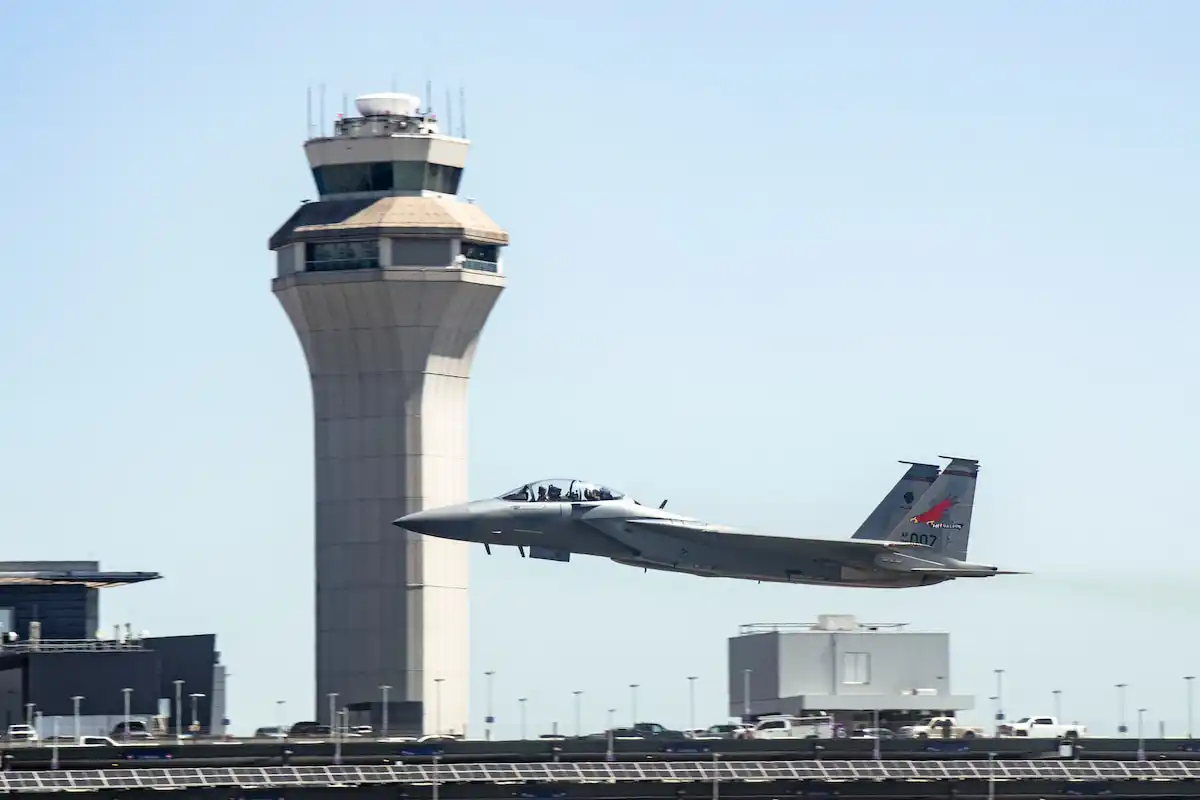
F-15EX Eagle II Price: Unpacking the 90-100 Million Dollar Question
For aviation enthusiasts, military analysts, and curious taxpayers alike, the question of "was kostet ein F15 Kampfjet?" – or "what does an F-15 fighter jet cost?" – often leads to a complex web of figures. While the iconic F-15 Eagle has been a cornerstone of air superiority for decades, its latest incarnation, the F-15EX Eagle II, comes with a price tag that raises eyebrows: roughly 90 to 100 million US dollars per aircraft. This isn't just a simple sticker price; it's a dynamic figure influenced by a multitude of factors, from technological advancements to global economics. Understanding this cost requires delving deeper than the initial acquisition price, exploring what makes this modern marvel of engineering so expensive.
The Nuances of Fighter Jet Pricing: Flyaway vs. Fully Equipped
When discussing the cost of a sophisticated military aircraft like the F-15EX Eagle II, it's crucial to distinguish between different pricing models. The most commonly cited figure, often in the 90-100 million dollar range, typically refers to the "flyaway" cost. This represents the price of the basic aircraft itself, fresh off the production line, without all the ancillary systems needed for full combat readiness.
- Flyaway Cost: The Bare Aircraft
The flyaway cost covers the airframe, engines, basic avionics, and core systems. For the F-15EX, this figure has seen fluctuations across different production lots (batches of aircraft ordered). For instance, Lot 2 F-15EX jets were priced around $90 million USD each. Subsequent contracts, such as Lot 3, saw this rise to approximately $97 million USD per jet, while Lot 4 has reportedly settled slightly lower at about $94 million USD. These variations highlight the dynamic nature of defense contracting, where negotiation, order volume, and prevailing economic conditions play a significant role. - Fully Equipped and Combat-Ready: The True Investment
However, a fighter jet is more than just an airframe. To be truly combat-ready, it requires a suite of advanced mission systems. When these additional components are factored in, the price of an F-15EX can climb significantly. These mission-critical systems include:- Electronic Warfare Systems: The sophisticated Eagle Passive/Active Warning and Survivability System (EPAWSS) is a prime example, providing unparalleled electronic protection and attack capabilities.
- Targeting Pods: External pods that house advanced sensors, lasers, and cameras for precision targeting.
- Infrared Search and Track (IRST) Systems: Passive sensors that detect heat signatures, crucial for stealth detection and beyond-visual-range engagements.
With these essential additions, the cost of a single F-15EX Eagle II can reach up to around $117 million USD. This comprehensive figure reflects the true investment in a fully mission-capable aircraft, ready to integrate into a modern air force.
Example Calculation: The Scale of Investment
To put this into perspective, acquiring just three F-15EX jets, depending on the specific lot and level of equipment, could represent an investment in the range of $270-291 million USD. This underscores the substantial financial commitment nations undertake to maintain a modern air defense capability.
Key Factors Driving the F-15EX Eagle II's High Price Tag
Several intertwined factors contribute to the F-15EX's multi-million dollar price. Understanding these drivers is crucial for anyone trying to grasp the realities of modern defense procurement, especially when considering the "F15 Jet Kosten" in today's economic climate.
1. Inflation and Economic Pressures
The global economic landscape plays a significant role in defense costs. In recent years, the price of an F-15EX has seen an upward trend, rising from figures below $80 million to the current $90-97 million range. This increase is largely attributable to:
- Inflation: General economic inflation impacts the cost of raw materials, components, and labor across the supply chain.
- Supply Chain Disruptions: Issues within the global supply chain, exacerbated by geopolitical events and pandemics, lead to increased costs and delays for specialized parts.
- Labor Shortages: The highly skilled workforce required in the defense industry, from engineers to specialized technicians, commands higher wages, adding to overall production expenses.
2. Unparalleled Equipment Level and Advanced Technology
The F-15EX isn't just a reboot of an old design; it's a thoroughly modernized platform incorporating cutting-edge technology. The integration of advanced avionics and systems directly contributes to its elevated price:
- Advanced Avionics: A state-of-the-art glass cockpit, powerful mission computers, and integrated display systems enhance pilot situational awareness and control.
- Active Electronically Scanned Array (AESA) Radar: The AN/APG-82(V)1 AESA radar offers superior range, resolution, and resistance to jamming, but comes at a significant cost.
- Electronic Warfare Systems (EPAWSS): As mentioned, systems like EPAWSS are incredibly complex and expensive to develop, produce, and integrate.
- Open Mission Systems (OMS) Architecture: The F-15EX's open architecture allows for rapid, modular upgrades to hardware and software, making it future-proof but also requiring advanced initial development and integration costs. This capability is a significant value-add, ensuring the aircraft remains relevant for decades.
3. Production Lots and Negotiation Dynamics
Military aircraft are typically purchased in "lots" or batches over several years through multi-year contracts. The price per jet can fluctuate significantly between these lots due to various factors:
- Negotiation Power: The U.S. government, as a primary customer, leverages its buying power to negotiate favorable terms, but market conditions still dictate much of the pricing.
- Order Volume: Larger production runs within a specific lot can sometimes lead to economies of scale, potentially lowering the per-unit cost. Conversely, smaller, more specialized orders might incur higher unit costs.
- Contract Specifics: Each contract can include different provisions for research and development, spare parts, support equipment, and training, all impacting the final per-aircraft price.
Beyond the Purchase Price: The True Cost of Ownership
While the 90-100 million dollar acquisition cost of an F-15EX is substantial, it represents only a fraction of the total investment over the aircraft's projected lifespan. Military analysts and policymakers frequently emphasize that focusing solely on the "price per jet" can be misleading. The true cost of operating a fighter jet like the F-15EX, often referred to as the Total Cost of Ownership (TCO), encompasses a much broader range of expenses:
- Maintenance and Upkeep: Regular inspections, repairs, and replacement of parts are continuous and costly. The F-15EX, while designed for easier maintenance than some stealth aircraft, still requires extensive logistical support.
- Fuel Costs: Operating powerful twin-engine jets for thousands of flight hours consumes vast quantities of jet fuel, a significant recurring expense.
- Upgrades and Modernization: To remain effective against evolving threats, aircraft undergo periodic upgrades to their software, hardware, and weapon systems. The F-15EX's open architecture is designed to facilitate these, but the upgrades themselves are not free. For a deeper dive into these ongoing costs, see our article: F-15EX Total Cost: Beyond the Initial 100 Million Dollar Price Tag.
- Personnel and Training: The highly skilled pilots, ground crews, and support staff required to operate and maintain these aircraft represent a massive human resource investment, including their salaries, benefits, and continuous training.
- Infrastructure: Maintaining airfields, hangars, maintenance facilities, and specialized equipment adds another layer of expense.
These lifecycle costs often dwarf the initial purchase price, making a single F-15EX an investment that runs into hundreds of millions of dollars over its decades of service.
The F-15EX in Context: More Expensive Than a Fifth-Gen Fighter?
Perhaps one of the most surprising aspects of the F-15EX's pricing is that its flyaway cost is now often higher than that of the Lockheed Martin F-35A Lightning II, a fifth-generation stealth fighter. This counter-intuitive fact sparks considerable debate and highlights the unique value proposition of the Eagle II.
While the F-35A benefited from massive economies of scale due to its widespread international adoption and multi-variant production, the F-15EX's production is more focused on fulfilling specific niche roles for the U.S. Air Force and potentially a few export customers. The F-15EX also incorporates many of the advanced systems found in fifth-generation fighters into an existing, proven airframe, often leading to complex integration challenges and specialized manufacturing processes that can drive up costs. This leads to an intriguing question: F-15EX vs F-35A: Is the Eagle II Now More Expensive?
Conclusion
The F-15EX Eagle II, a formidable modern fighter jet, commands an initial flyaway price of roughly 90 to 100 million US dollars, pushing towards $117 million fully equipped. This cost is a direct reflection of its advanced technological capabilities, the prevailing economic climate, and the intricacies of defense procurement. However, it's vital to remember that this figure is merely the starting point. The true "F15 Jet Kosten" – encompassing acquisition, maintenance, fuel, upgrades, and personnel over its entire operational life – will be significantly higher, representing a strategic, multi-billion dollar commitment for any nation that fields it. The F-15EX's price tag, while substantial, underlines its critical role in maintaining air superiority and its status as a technologically advanced platform built for the future.